
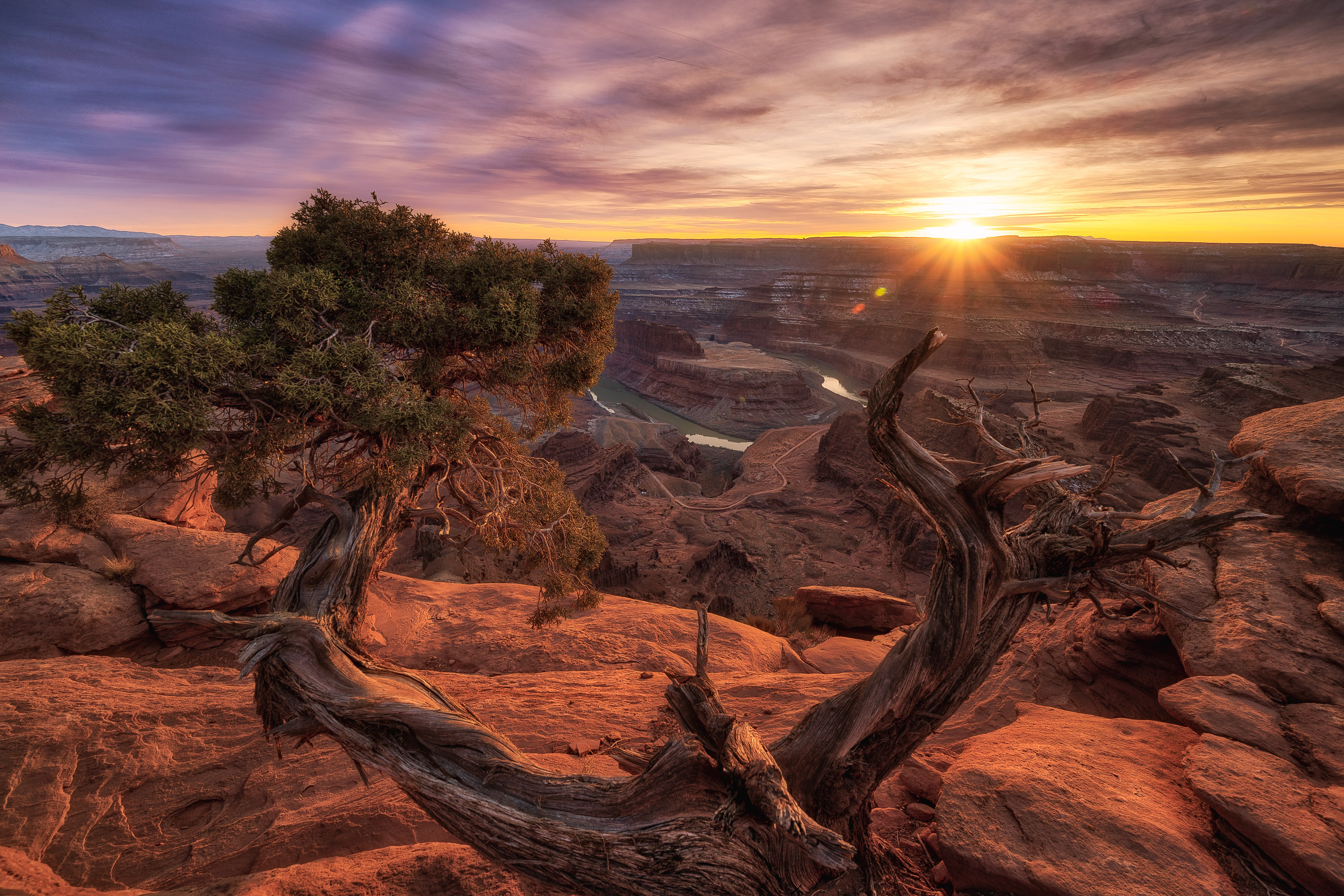
RED ROCK, RIGHT LIGHT
A 14-Day Fine Art Landscape Photography Immersion. Aerial Photography Instruction Included.
Moab • Bluff • Monument Valley • Hanksville
Workshop # 1: Tuesday March 30th - Monday April 12th, 2027.
Workshop # 2: Tuesday April 13th - Monday April 26th, 2027.
Welcome to the Desert.
Utah's canyon country does not perform on command. It has no interest in your schedule, your flight home, or the fact that you drove eleven hours to be here. What it does have is some of the most improbable, gloriously over-designed rock on the planet, and a quality of light that, for about forty minutes twice a day, makes otherwise sensible photographers forget to eat breakfast. This itinerary is built around those forty minutes — and around the many quieter hours in between where the real education happens.
Over fourteen days we'll work from three basecamps, moving through iconic national parks, quiet backcountry, tribal land, and the badlands beyond. This is not a scenic drive with a camera along for the ride. It is a structured, hands-on workshop: composition, exposure, light, post-processing, and the unglamorous discipline of showing up in the dark, in the cold, before the rock decides to glow.
We take the land seriously — every stop on this itinerary sits on public land, tribal land, or protected ground that deserves better than a tripod dragged across biological soil crust. And we take the craft just as seriously, which is really what the next section is about.
How We Move: The Hybrid Model
This trip runs on a hybrid transportation model designed to give you the best of both worlds — the independence of your own timeline getting to and from the region, and the ease of not having to think about driving once you're here. You are responsible for getting yourself to three hub check-ins over the course of the trip: Moab (Day 1), Bluff (Day 6), and Hanksville (Day 10). Once you're at a hub, we take the wheel — every sunrise run, every midday relocation, every last-light dash is handled for you in premium AWD SUVs, with a dedicated 4x4 vehicle brought in for the one day (Day 3) that demands real ground clearance and a sense of humor about washboard roads. You bring your gear and your alarm clock discipline. We bring the horsepower.
Reading the Sky: Our Approach to Light
Beginner photographers wait for good weather. Experienced ones learn to work with whatever the sky decides to give them — and out here in the barren lands of eastern Utah, the sky changes its mind constantly. A meaningful part of this trip's instruction is built around exactly that: reading conditions in real time and adapting technique rather than hoping the light cooperates. By the end of two weeks, you won't just have a folder of beautiful pictures — you'll have a working understanding of how to shoot in several conditions.
Blue Hour
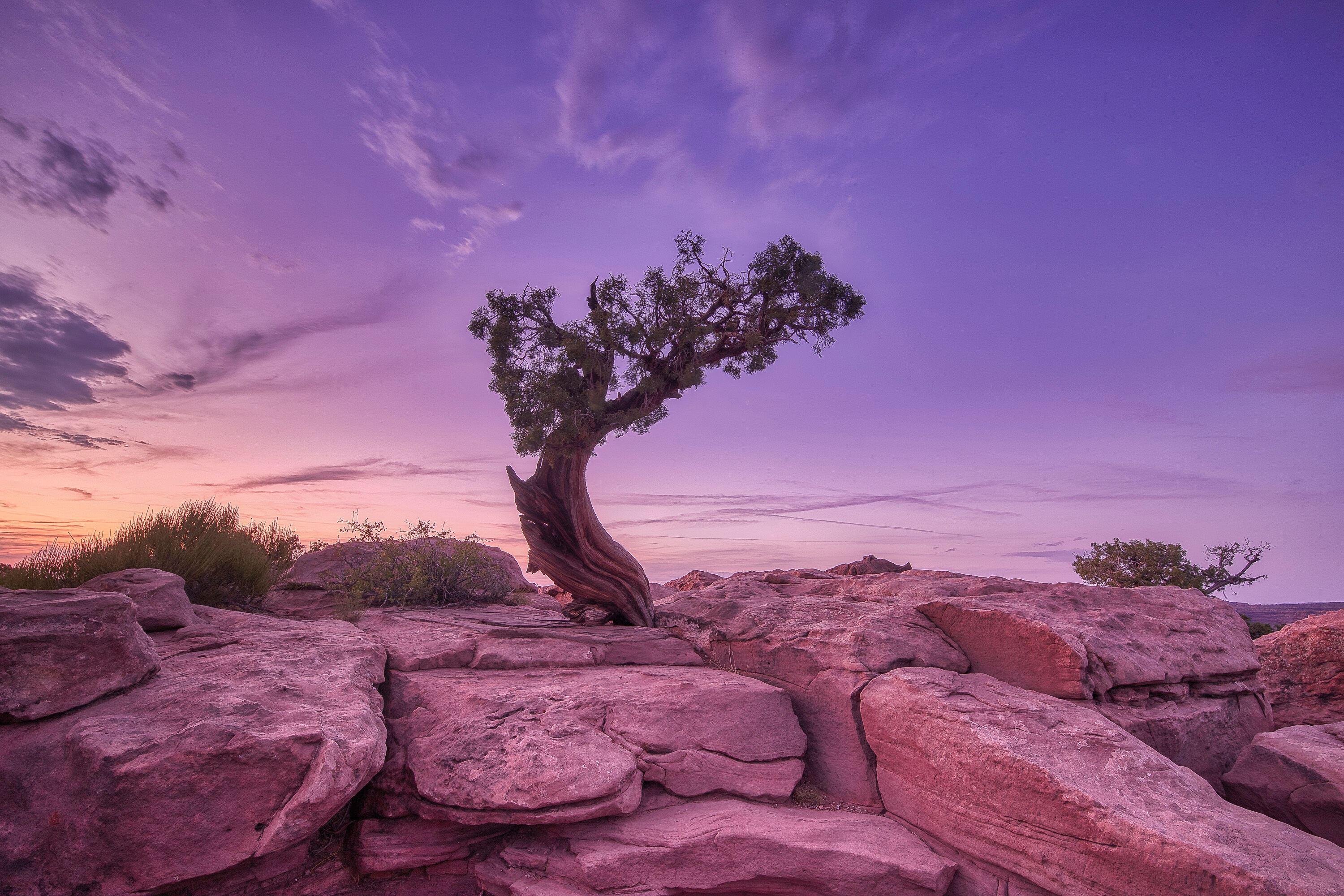
The twenty or so minutes bracketing true sunrise and sunset — after the color show but before full daylight, or after the sun drops but before the color fades — are some of the most underused minutes in landscape photography. Cool, even light; long exposures; a sky that holds detail without a graduated filter fighting you for it. We'll linger here deliberately, on both ends of the day, rather than packing up the moment the "main event" is over.
Chasing Storms
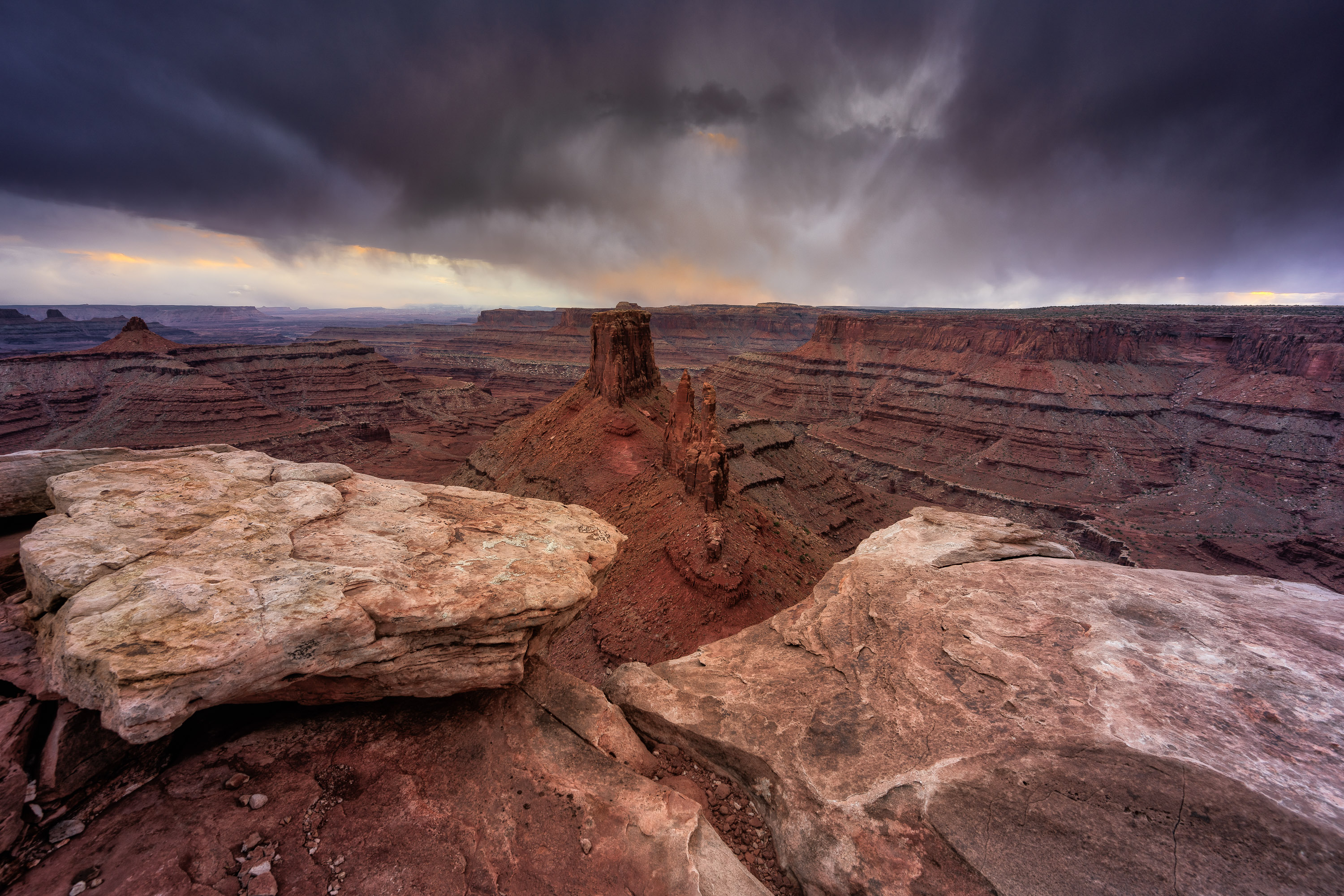
Utah's high desert — particularly through the summer monsoon window — produces some of the most dramatic skies in the country: anvil clouds stacking over distant mesas, virga trailing like smoke, shafts of light breaking through a wall of rain. When conditions allow, and always with safety as the deciding factor, we'll reposition to chase exactly that kind of drama. Lightning we photograph the way it should be photographed: from a very respectful distance, with an instructor watching the radar as closely as the composition.
Clear Sky Days
Not every day delivers clouds, and that's fine — a clean, cloudless sky is its own technical puzzle. We'll work on using hard, high-contrast light deliberately rather than fighting it: strong shadow shapes, graphic minimalism, and the kind of saturated, deep-blue skies that make sandstone look like it's lit from within.
Overcast & Soft Light
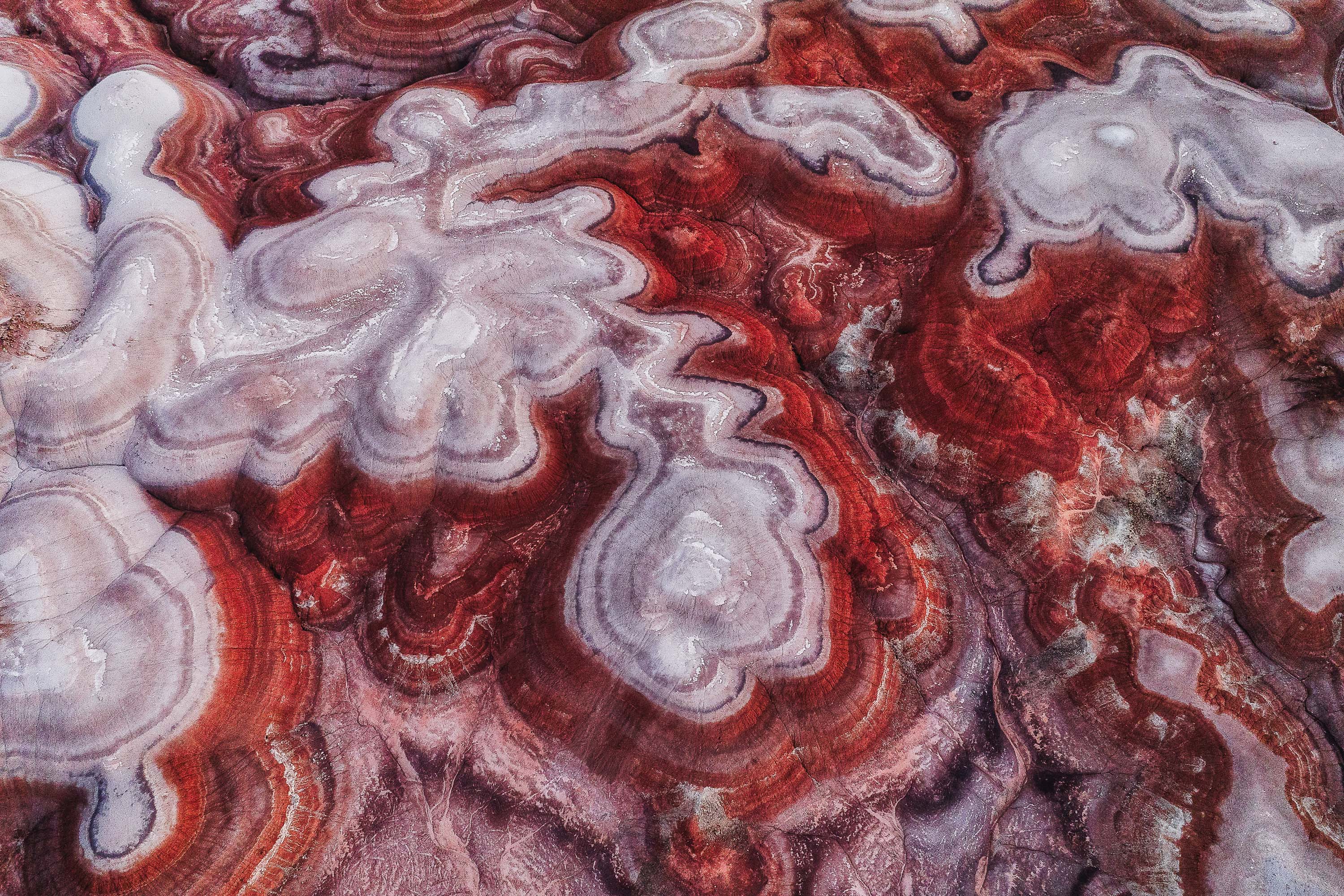
Flat grey skies are, secretly, a landscape photographer's best friend. Soft, shadowless light is exactly what slot canyon interiors, arch undersides, and the banded clay of the Bentonite Hills want — even, saturated color with none of the contrast headaches of full sun. If the forecast turns cloudy, don't be disappointed. Be ready.
Trip Vitals
Duration | 14 days / 13 nights (12 full shooting days plus two half-days — arrival on Day 1, departure on Day 14) |
Basecamps | Three hub towns: Moab (5 nights), Bluff (4 nights), and Hanksville (4 nights) |
Lodging | A comfortable modern motor-lodge in Moab, a red-rock desert resort in Bluff, and a rustic, reborn mining-outpost retreat in Hanksville — see "Your Basecamps" below for the full feel. |
Transportation | A one-of-a-kind hybrid model — guests self-drive to the three hub towns only. All on-location transportation provided in premium AWD SUVs, plus a dedicated 4x4 vehicle for Day 3. |
Terrain & Difficulty | Moderate. Uneven slickrock, sand, and backcountry dirt roads; several outings involve 1–3 miles of walking to viewpoints. No technical climbing or light scrambling. |
Elevation | Roughly 4,000–6,500 ft across the itinerary — enough to notice if you're coming from sea level, not enough to require acclimatization. |
Daily Rhythm | Pre-dawn wake-ups (as early as 4:00–4:30 AM), full field days, sunset sessions, and select night-photography outings. Two dedicated post-processing/instruction sessions are built in (Days 8 and 12). |
Climate | High desert — expect cold mornings, warm-to-hot afternoons, wind, and the occasional dramatic sky. Layers are not optional. |
Group Size | Kept intentionally small to preserve one-on-one instruction time and respect fragile locations. Contact us for current availability. |
Permits & Access | Navajo Nation guide permits for Monument Valley and Hunts Mesa, and all required park/land-use permits, are arranged on your behalf. |
Instruction Level | Open to enthusiastic intermediate through advanced shooters. You should be comfortable with your camera's manual controls; we'll sharpen everything from there. |
Your Basecamps: Rest & Recovery
In Moab, home base is a comfortable, modern hotel just minutes from the trailheads — the kind of place where you can rinse the red dust off in a hot shower, prop your boots by the door, and be asleep before you've finished thinking about tomorrow's sunrise. Clean lines, a pool for sore legs, hot tub because you're on vacation, and a lobby coffee pot that will become a very dear friend of yours at 4:15 in the morning.
Our Bluff basecamp trades polish for personality — a low-slung desert resort built into the red rock itself, with warm adobe-toned casitas, wide porches facing the mesas, and a stillness at night that makes the stars feel closer than they have any right to be. It's the kind of property that makes you want to linger over coffee on the patio, if the schedule would only allow it.
Hanksville is where the trip goes properly frontier — our basecamp here has the character of an old mining outpost reborn: weathered wood, wide-open sky, and a horizon of badlands that looks almost extraterrestrial by moonlight. It's rustic, it's quiet, and after a long day chasing light across the badlands, it's exactly the kind of unpretentious comfort you'll want to come home to.
Investment
All-Inclusive Tuition | $8,600 per person, double occupancy |
Single Supplement | $1,400 (private room throughout, all three hubs) |
Non-Photography Companion Fee | $2,400 — for a partner joining the trip without photographic instruction. Includes lodging and meals. |
Payment Terms:
- - Deposit: $2,000. Due 120 prior to workshop #1 or #2 start date. The deposit reserves your place in the workshop.
- - $4,000 due 90 days prior to workshop #1 or #2 start date.
- - Remaining balance due 60 days prior to workshop #1 or #2 start date.
- Double Occupancy: $2,600 remaining balance.
- Single Supplement: $4,000 remaining balance.
- Non-participant companion supplement: $5,000 remaining balance.
What's Included
—Full photographic instruction — sunrise through night photography — every shooting day
—All on-location transportation in premium AWD SUVs, including a day's outing in a dedicated 4x4
—13 nights' lodging at the three basecamps
—All meals throughout the trip
—Navajo Nation guide fees and permits for Monument Valley and Hunts Mesa
—Park and land-use entrance fees for included locations
—Two structured post-processing and portfolio-review sessions
—Small-group, hands-on field instruction at every location
What's Not Included
—Transportation to Moab (Day 1) and between hub towns on transfer days — you drive yourself; we'll give you a route and a reason to stop for pie along the way
—Airfare and travel to/from Utah
—Personal camera gear, memory cards, and accessories
—Alcohol and items of a personal nature
—Travel insurance (strongly recommended)
—Gratuities for guides
Requirements
Please, kindly keep in mind, this tour is a working photography trip, not a bus tour with a nice view. A few things to know before you commit your calendar:
—A valid driver's license — you'll self-drive to Moab and between the three hub towns.
—Comfortable walking 1–3 miles over uneven slickrock, sand, and occasional loose rock, sometimes in the dark.
—Ability to rise well before dawn, repeatedly, for two weeks.
—A working knowledge of your camera's manual exposure controls. We teach technique, composition, and light in depth — this isn't a from-scratch "what is aperture" workshop.
—Tolerance for temperature swings — 30°F mornings and 85°F afternoons are entirely possible in the same day.
—A respectful attitude toward the land, its wildlife, and the Navajo Nation communities that graciously allow us onto Monument Valley and Hunts Mesa.
Recommended Gear
You don't need a truckload of equipment to make strong images out here — you need the right handful of tools, used with intention. Here's what we recommend.
Camera Bodies
—Any interchangeable-lens mirrorless or DSLR capable of full manual exposure and RAW capture
—Weather-sealing is strongly recommended — Utah dust is relentless, and finds its way into everything
—A second camera is a genuine luxury during golden hour, when swapping lenses can cost you the shot
Lenses
—Wide-angle zoom (14–24mm or 16–35mm) — the workhorse for canyon vistas, arches, and night skies
—Mid-range zoom (24–70mm) — your everyday, in-between-thoughts lens
—Telephoto zoom (70–200mm, ideally reaching 400mm) — essential for compressing and isolating distant spires and mesa layers
—A fast prime (24mm or 35mm, f/1.4–f/2.8) — a genuine asset for Milky Way work on our night sessions
Support & Filters
—A sturdy tripod rated for wind — Moab afternoons and the open desert flats will test it
—Circular polarizer
—2–3 stop soft-edge graduated ND
—6–10 stop solid ND, for the days when a seasonal desert waterfall is running and you'd like to turn it to silk
Accessories
—Intervalometer / wired or wireless remote shutter release
—Headlamp with a red-light mode (protects night vision — yours and everyone else's frame)
—Extra batteries and a charger — cold desert mornings drain them faster than you'd expect
—Plenty of memory cards; we shoot a lot, and the second half of this trip is not the place to discover you're at 97% full
—Rocket blower and microfiber cloths — see "Utah dust," above
—A knee pad or small sit-pad for low-angle compositions
—Sturdy hiking boots or shoes with real tread
—Layered clothing, sun protection, and at least a 2–3 liter water reservoir
Optional but Worth Considering
—Star tracker, for guests wanting to push further into deep-sky night imagery
—Laptop or tablet plus a portable SSD for our two dedicated editing sessions
Drones
While this workshop isn't a drone-driven trip, several locations are outstanding for aerial work, including and definitely not limited to Fisher Towers, Valley of the Gods, Factory Butte, Bentonite Hills and the San Juan river, all of which offers some of the best aerial terrain in the continent., If you would like to bring a drone, we absolutely welcome and encourage you to do so. Drone instruction will be provided and ample time will be available for several locations. A few important notes: drone use is prohibited within Arches and Canyonlands National Parks, and tightly restricted on Navajo Nation land, including Monument Valley and Hunts Mesa. Know the rules for each location before you bring it out of the case, and fly only with current registration and certification.
Day-by-Day Itinerary
A living itinerary bends with weather, light, and the occasional closed road — but here is the shape of your fourteen days.
DAY 1 — Welcome to Canyon Country
Half-day. No sunrise session as part of the core itinerary — get here, get settled, get fed, and let's meet the canyon properly this evening.
***** Optional (Complimentary): Mesa Arch at Sunrise — Mesa Arch is not included in the core itinerary. It's Canyonlands' single most photographed formation, and sunrise there means sharing a narrow overlook with fifty other tripods — more spectacle than instruction. That said, if you're arriving in Moab early, we're happy to meet anyone interested at Mesa Arch that morning for a complimentary, informal outing and a few tips on working the scene despite the crowd. You'd drive yourself, and afterward you're free to explore Canyonlands independently until we officially convene at 4:00 PM. If you've never been to Mesa Arch before, and provided a sunrise is expected absent of overcast, it's worth going at least once.
Day | Check-in at 3:00 PM. We'll gather as a group at 4:00 PM for introductions, gear check, and a briefing on how the next two weeks will run — then head straight out for our first outing on a legendary switchback road carved into the canyon wall, the kind of route that looks better in a photograph than it feels in the passenger seat. It's less about the shot tonight and more about getting your eye — and your tripod legs — under you. |
Sunset | Green River Overlook — a big, honest introduction to the scale of Canyonlands, and a fitting first sunset for the trip. |
Basecamp | Moab |
DAY 2 — Canyonlands, Start to Finish
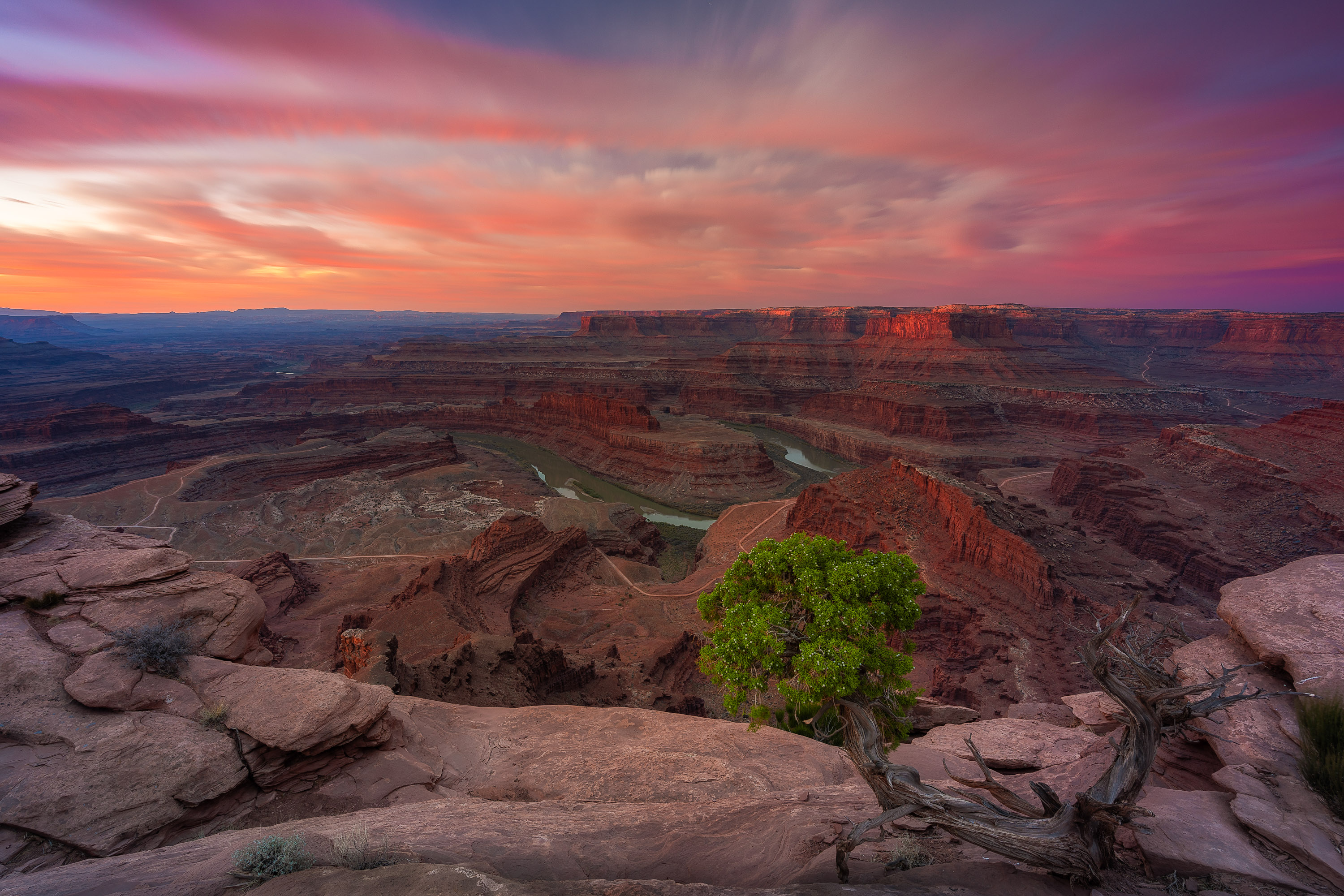
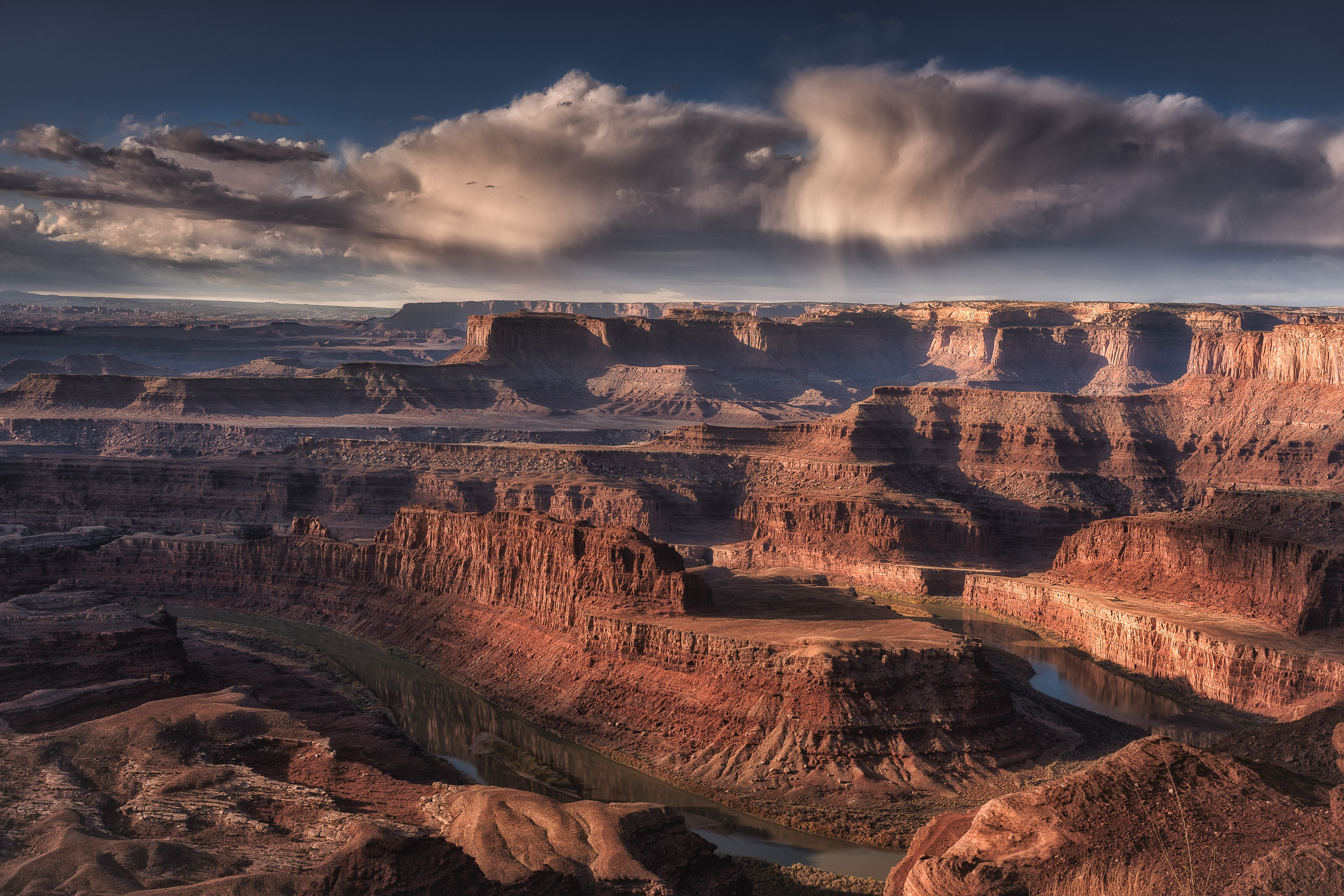
Sunrise | Dead Horse Point — one of the great overlooks in the American West, and worth every bit of the early alarm. |
Early AM | A sweeping cliff-edge panorama where the canyon opens wide enough to make the whole park feel like an entirely different planet. |
Day | A full day exploring Canyonlands National Park — composition work, light discipline, and plenty of instruction on reading a landscape this enormous without your images going flat. |
Sunset | Back to Dead Horse Point for the evening show — same location, entirely different light. |
Basecamp | Moab |
DAY 3 — Off-Pavement — The 4x4 Day
Sunrise | Marlboro Point — a lesser-known overlook that trades crowds for solitude, and one of the finest launch points on the trip for anyone flying a drone; the layered canyon geometry below is made for aerial work. |
Early AM | A hidden, seasonal waterfall fed by desert springs, tucked into a fold of slickrock that most visitors drive straight past. Bring your ND filter; if it's flowing, we'll spend real time on long-exposure water technique. |
Day | This is the day the dedicated 4x4 vehicle earns its keep. We'll head deep into Moab's southern backcountry arches — terrain the AWD SUVs simply can't reach — for formations most visitors to Moab never see, let alone photograph. |
Sunset | Fisher Towers, where the red spires catch the last light and turn a genuinely strange landscape into something operatic. It's also, unsurprisingly, one of the most rewarding aerial subjects on the entire itinerary. |
Basecamp | Moab |
DAY 4 — Arches: Icons and Quiet Corners
Sunrise | A quieter arch tucked well off the main trail, framed by juniper, silence, and very little company. |
Early AM | A permit-only labyrinth of towering sandstone fins, narrow enough to disorient — and, deep within it, one of the park's most striking and rarely photographed arches. |
Day | A full day working through Arches National Park's greatest hits, with an optional add-on to a soaring, gravity-defying arch reached by a moderate trail (also a well-known local rope-swinging spot — we'll leave that particular sport to others). |
Sunset | A cluster of massive arches gathered together as if the park couldn't decide on just one — a finale that looks like it was built for photographers, because at golden hour, it basically was. |
Basecamp | Moab |
DAY 5 — The Icon at Sunrise
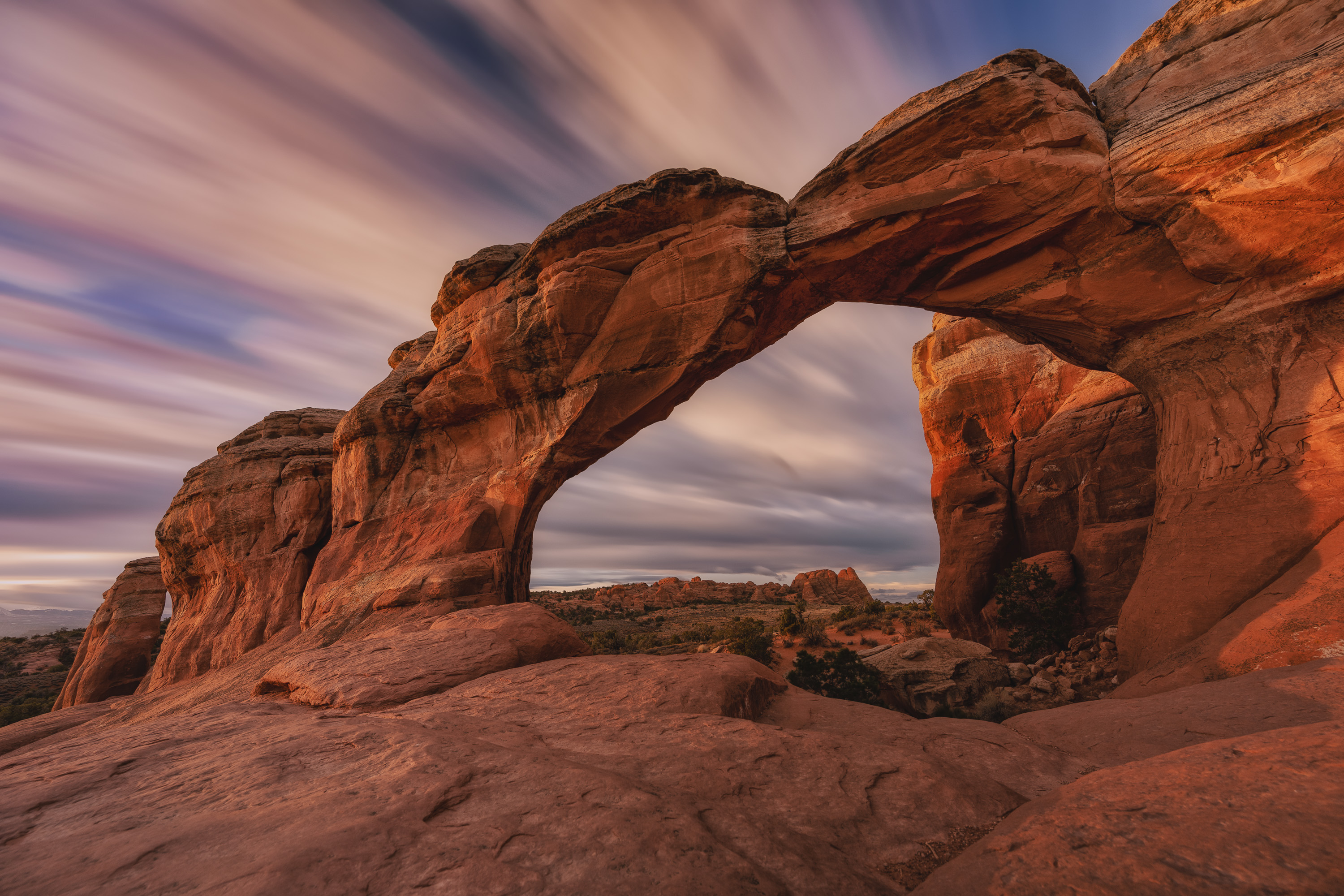
Sunrise | The mile-and-a-half hike up open slickrock in the dark, for the single most photographed arch in the state — the one on the license plate, if you drove here from Utah. Everyone else will just have to trust us. |
Early AM | A lower viewpoint of the same formation, for a completely different — and far less crowded — read. |
Day | A high desert overlook with the La Sal Mountains rising behind you, and a good stretch of instruction on layering foreground, mid-ground, and distance. |
Sunset | A sheer, freestanding tower rising straight off the valley floor — one of the most iconic climbing spires in the Southwest, and every bit as striking through a lens as through a windshield. |
Basecamp | Moab |
DAY 6 — Farewell Moab, Hello Bluff
Sunrise | One last Moab sunrise among the park's massive formations — hard to leave when the light is doing this. |
Early AM | A final wander through Arches before we point the vehicles south. |
Day | Transfer day. You'll self-drive from Moab to our Bluff hub, routed through Valley of the Gods — a smaller, wilder cousin of Monument Valley, and a favorite among the group's drone pilots for its wide-open buttes and easy access. It more than earns a few stops with your camera along the way. |
Sunset | Goosenecks State Park, where the San Juan River carves a set of entrenched meanders 1,000 feet below the rim. It's one of those views that photographs beautifully and still undersells the real thing. |
Night | Optional night session at Valley of the Gods for anyone with gas left in the tank after a travel day. |
Basecamp | Bluff |
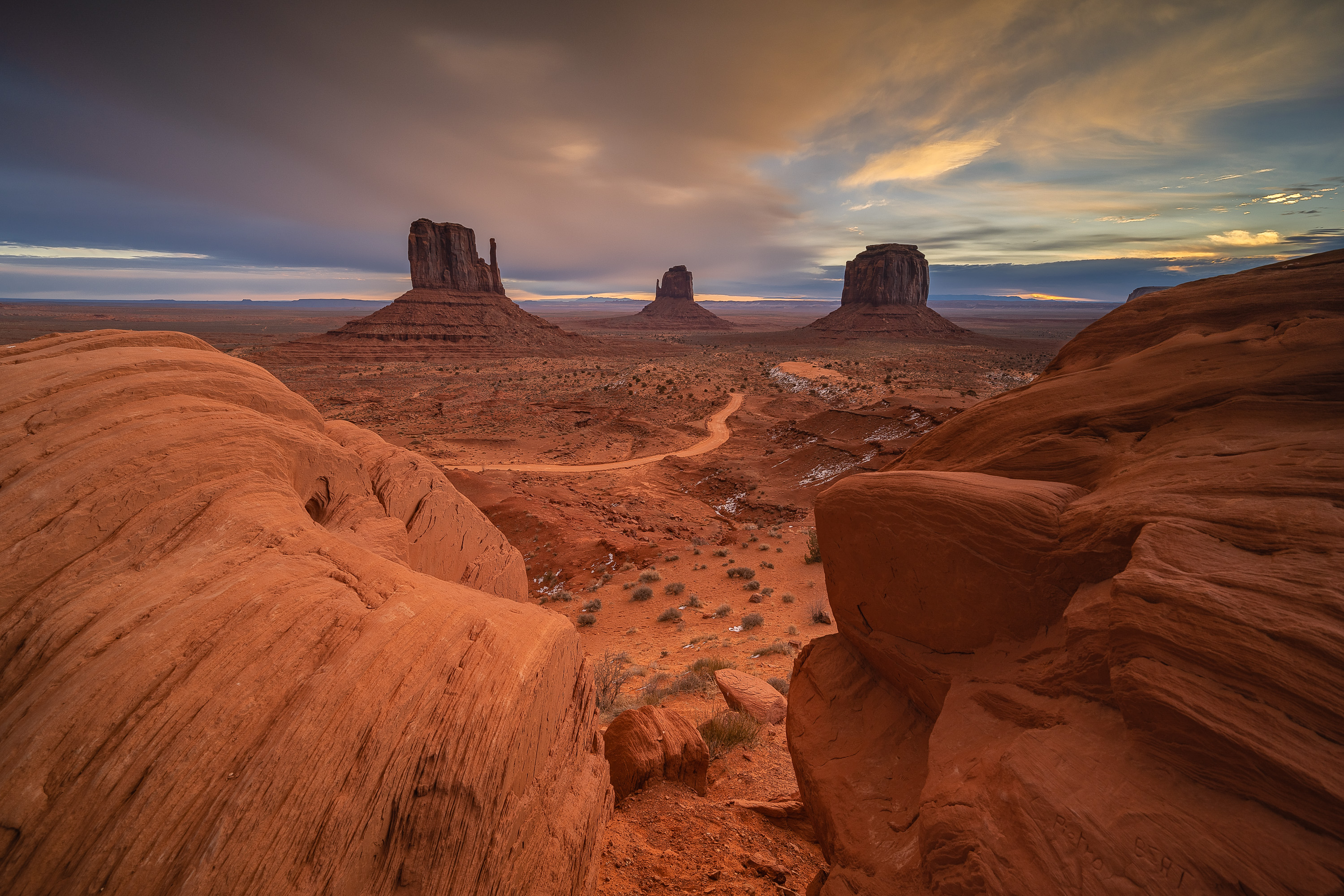
DAY 7 — Muley Point & Monument Valley
Sunrise | Muley Point — an overlook so vast it's genuinely disorienting, staring straight down into the Goosenecks and out across the entire Monument Valley basin. |
Early AM | Goosenecks State Park, or the small outpost of Mexican Hat, depending on the morning's light and cloud cover — and if it's the latter, expect to spend real time in the air. Of every stop on this trip, it might be the single best for aerial photography. |
Day | Into Monument Valley proper via the long, famously photogenic stretch of highway that vanishes straight into the buttes — a road made iconic on film — for our first real session among the valley's towering formations. |
Sunset | An evening session in Monument Valley, where the buttes turn the color their name suggests they should. |
Basecamp | Bluff |
DAY 8 — The San Juan & Post-Processing
Sunrise | Mexican Hat and the San Juan River, for reflections, texture, and a change of pace from towering rock — and, again, some of the best light and airspace on the whole trip for anyone flying. |
Early AM | Back into Monument Valley for continued instruction on light and composition in the tribal park. |
Day | A dedicated post-processing session. We'll sit down together, work through what you've shot so far, and talk editing workflow, RAW development, and how to keep a consistent voice across a body of work. |
Sunset | Valley of the Gods, revisited in different light than our Day 6 pass-through. |
Night | That same long highway into Monument Valley, this time under a canopy of stars. |
Basecamp | Bluff |
DAY 9 — Hunts Mesa — The Big One
Sunrise | Hunts Mesa. If there's a single location on this trip photographers talk about for years afterward, it's this one — a remote mesa top reached by a technical 4x4 road, looking down over Monument Valley from an angle almost nobody gets to see. This is what the whole trip has been building toward, and we've built the schedule around giving you the time here it deserves. |
Early AM | We linger on Hunts Mesa as the light keeps changing — there's no reason to rush off a view like this. |
Day | Back down into Monument Valley for continued shooting among the formations. |
Sunset | One of the valley's most slender and dramatic spires, for our evening session. |
Night | A night session in Monument Valley — the valley's great stone monoliths under a sky full of stars is not a bad way to end this particular day. |
Basecamp | Bluff |
DAY 10 — Farewell Bluff, Hello Hanksville
Sunrise | Monument Valley or Valley of the Gods — final call made based on the morning's light. |
Early AM | One more session in Monument Valley before we head north. |
Day | Transfer day. You'll self-drive from Bluff to our final hub, Hanksville, gateway to Factory Butte and the badlands beyond. |
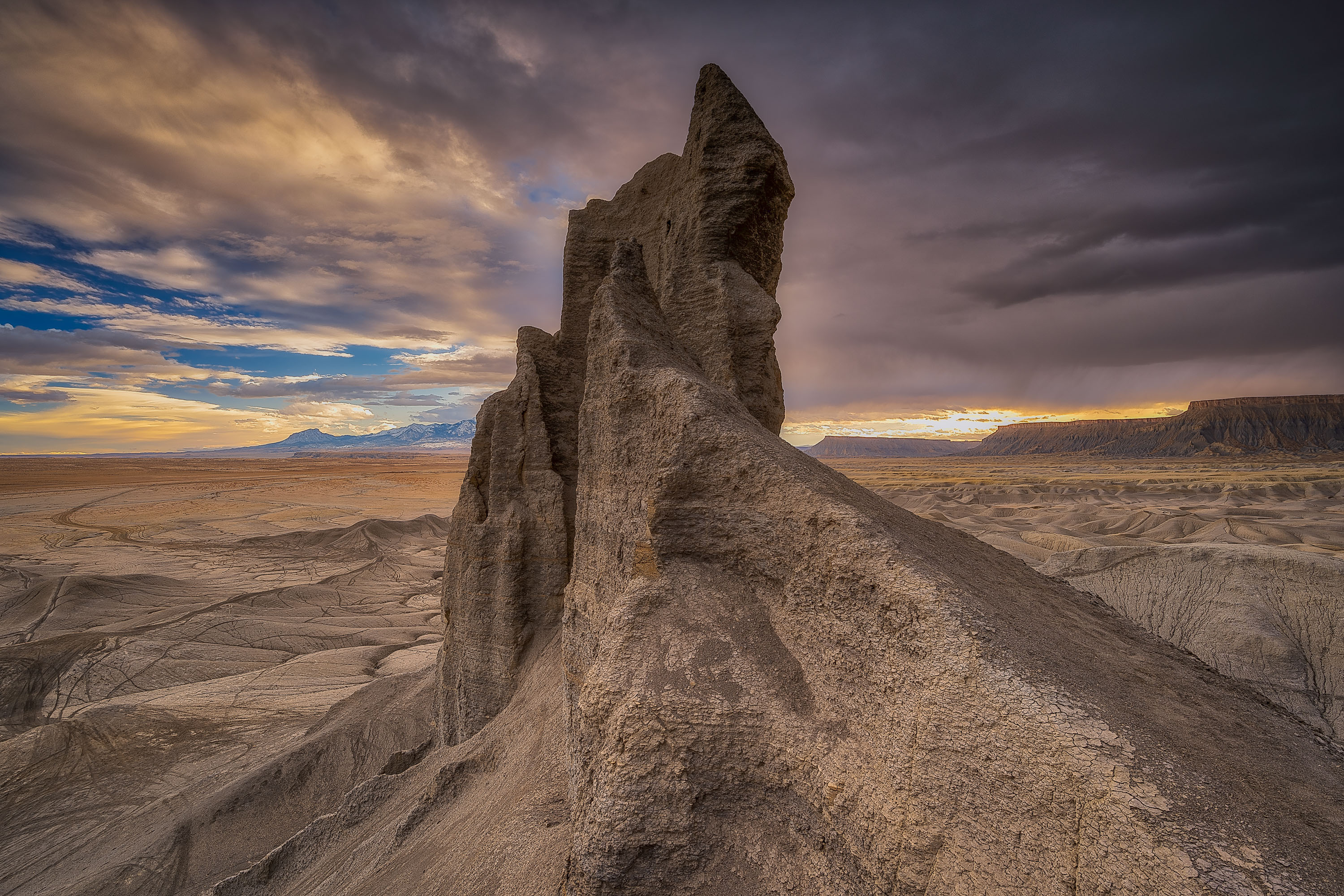
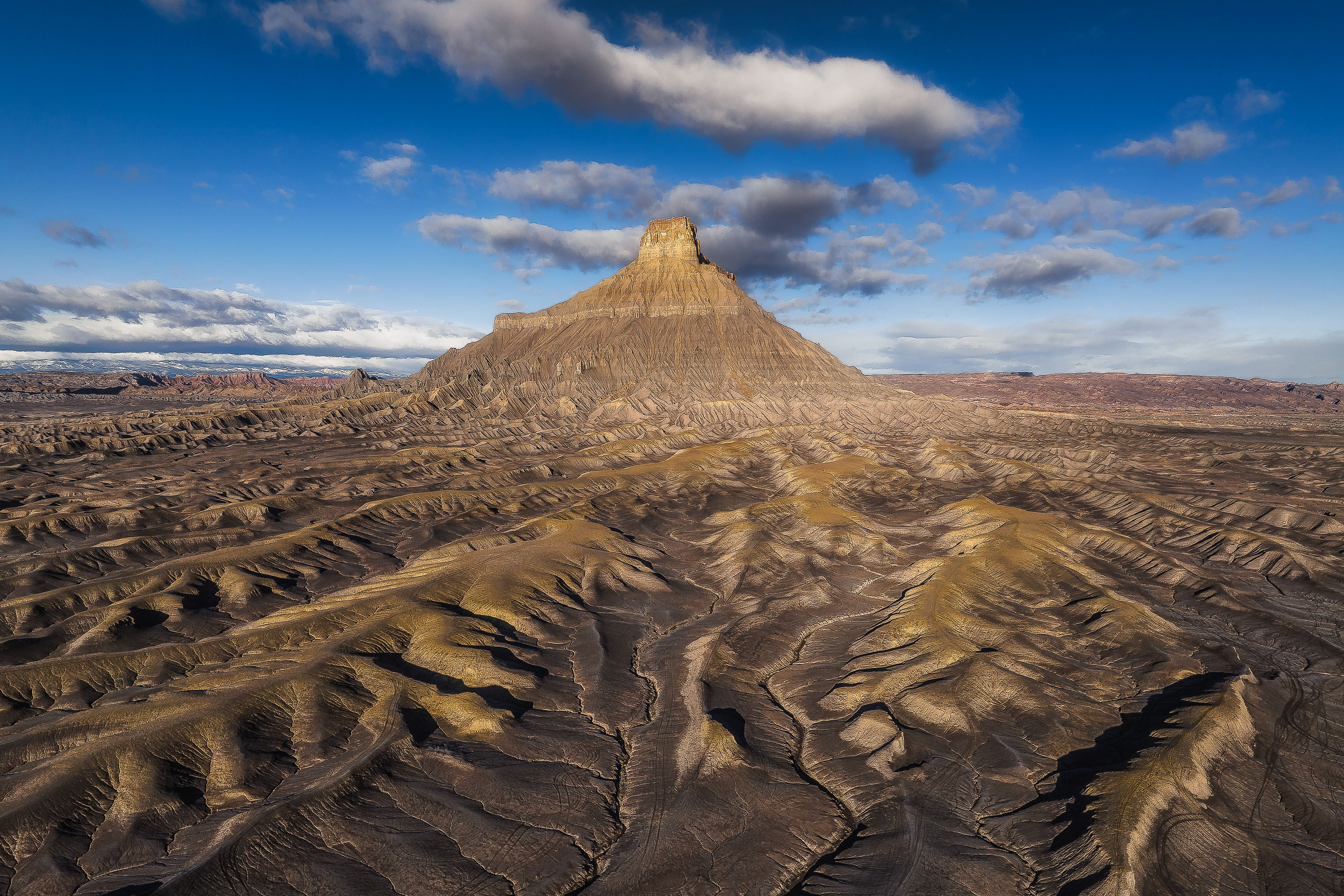
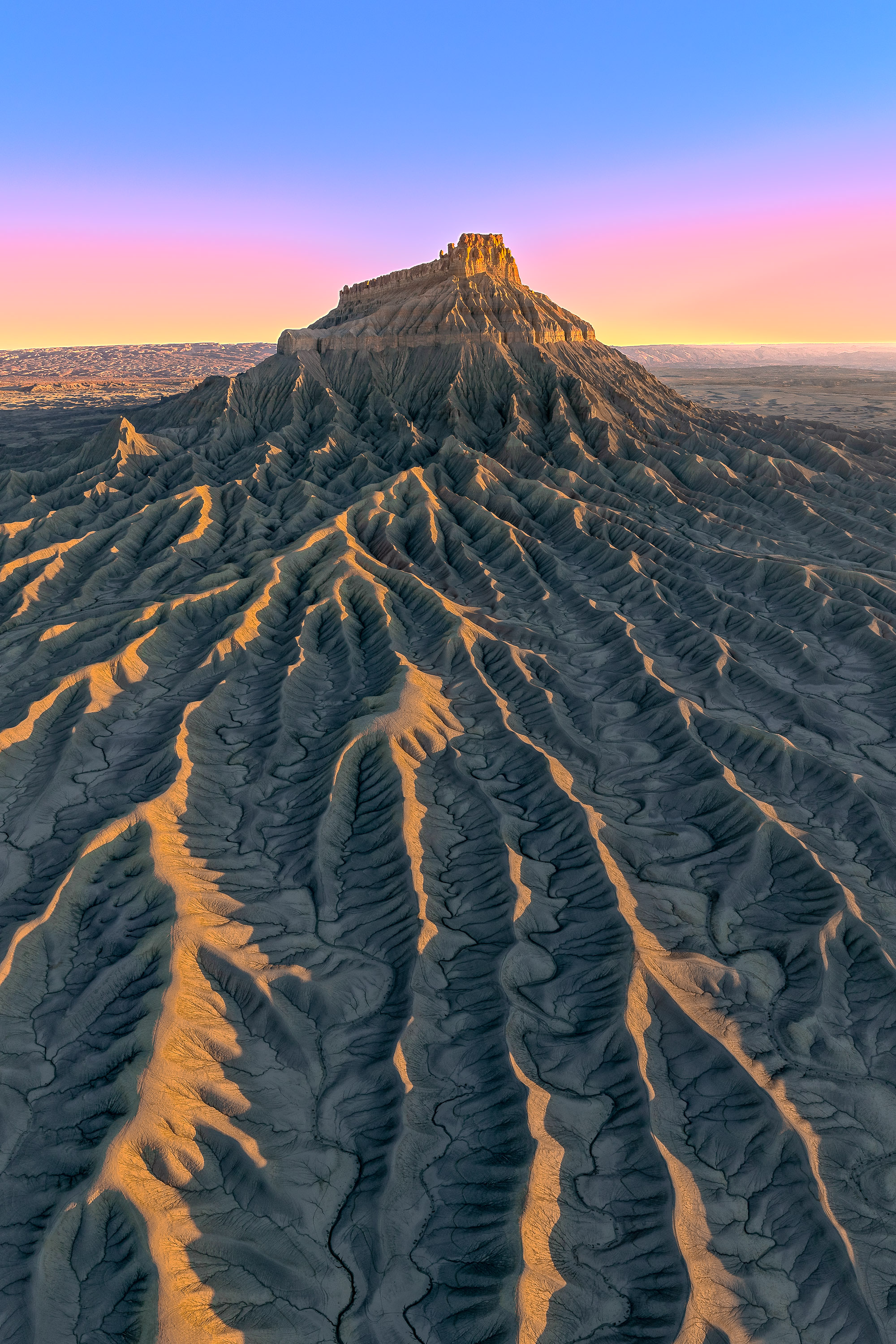
Sunset | Factory Butte — our first look at the badlands landscape that defines the last stretch of this trip, a dramatic change of scenery from the red rock we've spent nine days in, and another of the trip's standout aerial locations. |
Basecamp | Hanksville |
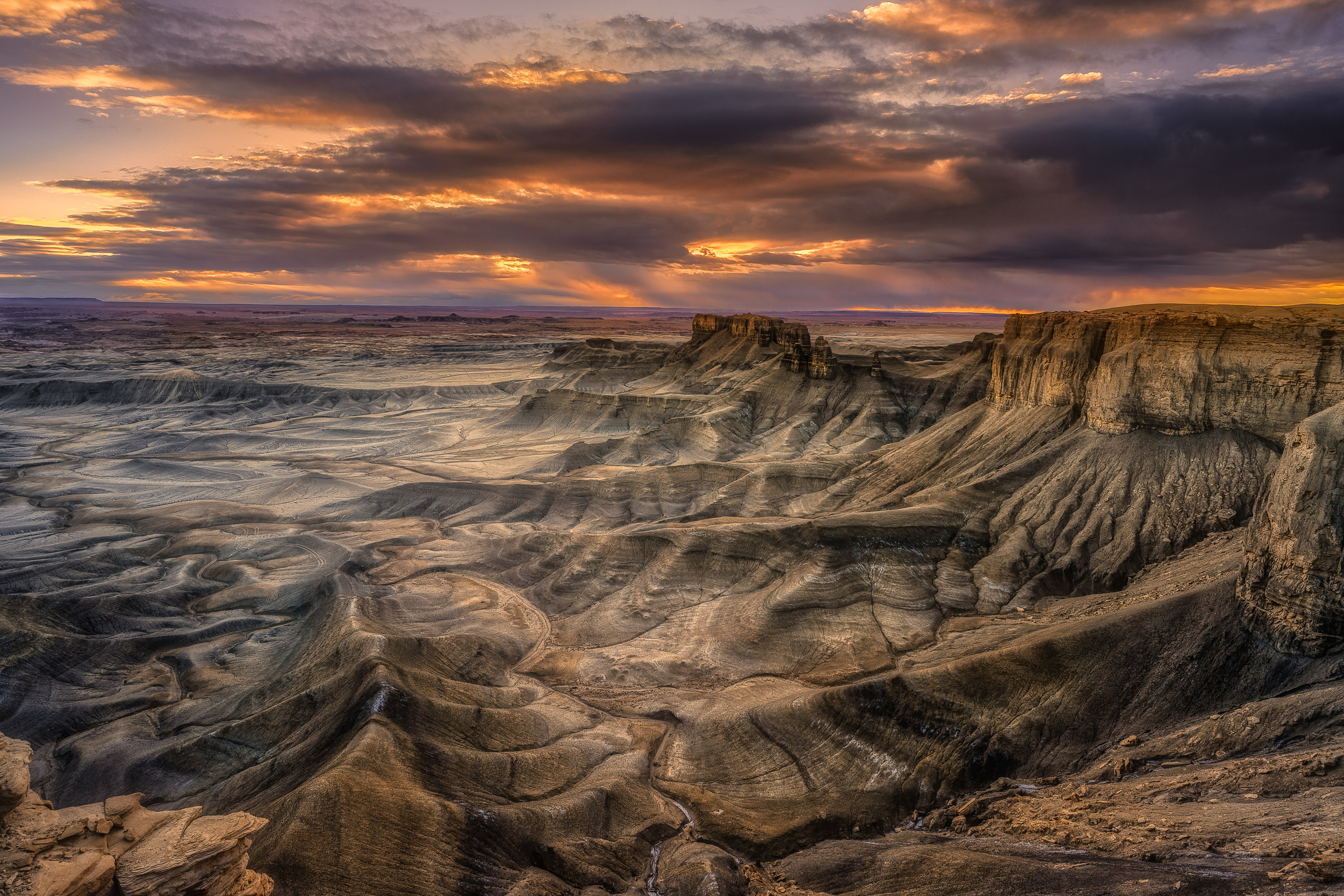
DAY 11 — Factory Butte & Goblin Valley by Night
Sunrise | Moonscape Overlook — precisely what it sounds like, and a genuinely excellent spot to send a drone up into the pre-dawn color. |
Early AM | Factory Butte, working the badlands texture in low morning light. |
Day | An extended session at Factory Butte — this landscape rewards patience, repetition, and aerial perspective more than almost anywhere else on the itinerary. |
Sunset | A sweeping mesa on the edge of Hanksville's badlands, for a fittingly strange end to a strange and wonderful landscape. |
Night | Goblin Valley State Park under the stars — thousands of hoodoos, no crowds, and some of the darkest skies in the country. |
Basecamp | Hanksville |
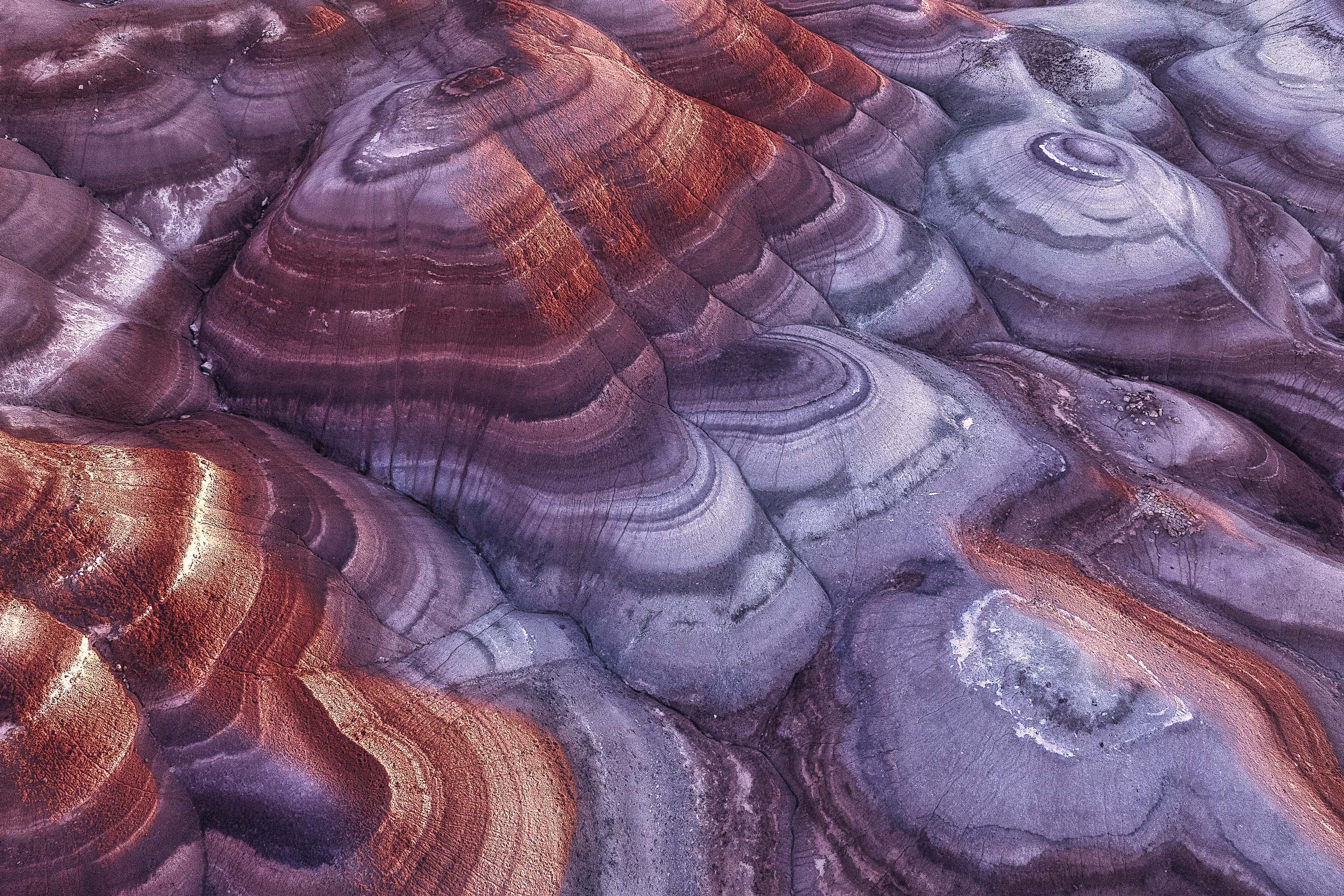
DAY 12 — Bentonite Hills & Studio Day
Sunrise | The Bentonite Hills — striped, otherworldly clay formations that look like they were painted rather than eroded. |
Early AM | More time in the Bentonite Hills as the light shifts across the banding. |
Day | Our second dedicated editing session — a full portfolio review, deeper post-processing instruction, and a chance to pull together the strongest work from the entire trip so far. |
Sunset | A single, dramatic spire rising alone from the clay flats — one of the more graphic, minimalist compositions of the trip. |
Basecamp | Hanksville |
DAY 13 — Goblin Valley & Into the Badlands
Sunrise | The quiet badlands outside Hanksville, for soft morning light and long shadows. |
Early AM | Goblin Valley State Park and the wild, wind-carved terrain surrounding it — daylight exploration of the hoodoo fields we shot under the stars two nights ago. |
Day | A narrow slot canyon carved deep into the sandstone — as much a lesson in confined-space composition and bounced light as it is a hike, with some scrambling and a headlamp required. |
Sunset | One last evening in the Bentonite Hills, closing the loop on where the morning began. |
Basecamp | Hanksville |
DAY 14 — Last Light
Half-day. No overnight tonight — safe travels home.
Sunrise | Moonscape Overlook, one final time — the trip's last sunrise together. |
Early AM | Factory Butte, for a farewell session before we pack it in. |
Day | The trip concludes. Depending on flight times, there's a good chance you'll be editing this morning's frames on the plane home. |
A final note ...
Fourteen days is a long time to chase light. By the end of it, you'll likely be sunburned, pockets filled with sand, and thoroughly sick of the sound of your own alarm clock. You will also have a photographic body of work etched into some of the most extraordinary — and, in a very real sense, irreplaceable — landscapes on the continent, and a working set of skills you didn't have when you arrived.
Here's what that actually looks like, day to day. Mornings start early and stay early — you'll be standing at a viewpoint in the dark more mornings than not, coffee in one hand and a headlamp on red mode, waiting for the sky to do something. That waiting is part of the instruction. So is what happens after: real-time feedback on your composition, your exposure choices, your histogram, delivered on location while the light is still changing, not secondhand over a laptop three hours later. You'll shoot the grand, sweeping vista and, twenty feet away, the small, quiet detail nobody else noticed — both are part of building a real body of work, and both get equal attention here.
Expect the itinerary to bend and morph, in accordance with chasing optimal light conditions where opportunities allow. We've built it around fourteen specific days and a very deliberate arc — Moab's icons, the wild open quietness around Bluff, the tribal grandeur of Monument Valley, and the alien badlands beyond Hanksville — but weather, road conditions, and light don't always read the schedule. If a storm is building over Factory Butte on a day we're supposed to be somewhere else, there's a real chance we go chase it instead. That flexibility isn't a flaw in the plan; it's the plan.
By midtrip, in Bluff, the rhythm will have settled into something almost meditative — early rise, strong light, long midday break, strong light again, and a night sky that gets progressively more absurd the farther we get from anything resembling a city.
Hunts Mesa, on Day 9, is where all of that comes together. It's the single hardest-earned view on the entire trip and, without question, the one people talk about years later. We've built the schedule specifically to give you unhurried time there — no rush, no crowd, just you, your camera, and one of the great overlooks in the American Southwest.
By the time we reach Hanksville, you'll notice your own process has changed. You'll find yourself checking the sky before you check your phone. You'll start seeing storm cells as opportunities instead of inconveniences. You'll shoot a flat grey morning at the Bentonite Hills with real enthusiasm, because you'll understand exactly why that light works. That shift — from waiting for good conditions to knowing how to use whatever conditions show up — is one of the major themes of this trip.
You'll also leave with something less tangible: two weeks spent in a small group of people who get up at 4 in the morning for a sunrise without being asked twice, who understand exactly why you'd drive two hours for forty minutes of good light, and who will very likely still be sending you their best frames from this trip a year from now. That part isn't on the itinerary either. It just tends to happen.